Showing posts with label Kids Writing. Show all posts

Friday, December 17, 2010

Winter Vacation Adventure

It's vacation time! How are you spending your winter break?

The great thing about being a writer is you can go on an adventure without even leaving your home. All you need is a pen and paper, and you are on your way!

Write about the winter vacation you would like to take: a trip to the beach, a European bike trip, a rocket to the moon. The sky's the limit.

Whether you are planning a trip, a snowball fight, or an adventure in your hometown, have a great vacation. And happy writing!

Post about dream winter vacation in the comments section below.

Monday, May 31, 2010

Why Write? Judy Sandra Speaks

Judy Sandra is a creative writer, journalist, and communications specialist. Her debut novel The Metal Girl was released in February 2010 by JSM Books.

This summer Judy Sandra, along with veteran DGA director Janet Davidson (Earth 2, Cagney & Lacey, Judging Amy) will be an instructor at the KIDS FIRST! Film Critics Boot Camp, which will be held from July 19-23 at The Georgian Hotel in Santa Monica, CA. This hands on day camp is open to 11 to 14-year-olds and will run for five days, from 9:00 a.m. - 4:00 p.m. The camp will also be held in New York City and Santa Fe, New Mexico.

For more on Judy, read her Write On! Author Q&A.

Why is writing so important for young people?
Writing well is important for most school subjects, especially at the college level, and that's just where it starts. Today, more than ever, we communicate with the written word, even though it may not be on paper. When I was a teenager, kids talked to each other on the phone, and writing was something you did for school, or to write a letter to someone. Now, because of computers, the Internet, and the speed of communications, we are constantly writing - emails, articles, announcements, blogs - and we need to write succinctly and efficiently.

What do you know now that you wish you knew when you were a tween or teen?
I once took horseback riding lessons and the first thing the instructor said to me was, "Anyone can sit on a horse and ride it. But it takes hard work and practice to master the skill of horseback riding." I think this truth applies to most skills in life. When I was younger, I would often get frustrated and discouraged when I couldn't master things right away. Even with writing, it takes time and practice to become a good writer. I wish I had known that it's OK to walk before you run, or in horse terms, to trot before you gallop.

How has the ability to express yourself helped you in life?
Besides being a writer, I have also been a radio announcer, a public speaker, a media liaison, and a public relations professional. All of these jobs were possible because I express myself well verbally and in writing. On a personal level, good communication is the basis of both my friendships and love relationships. Being able to express myself has allowed me to write books and articles that other people can enjoy.

Friday, May 14, 2010

Pet Adventure

Do you have a pet? Do you want a pet? What is the most outrageous pet you think you might want? What what you name it? How would you care for it?

Write a short paragraph, answering these questions. And remember, have fun!

Happy Writing!

Post about your "pet" in the comments section below.

Wednesday, May 12, 2010

Speaking with Chelsey Shannon, Author of Teen Memoir, "Chelsey"

When Chelsey Shannon's only surviving parent — her beloved father — was violently murdered days before her 14th birthday, her life was forever changed. Chelsey struggled to make sense of her personal tragedy and find a way to flourish despite the odds.

The author of Chelsey in the "Louder Than Words" series, Chelsey Shannon is currently editing a play to be produced by her school — The School for the Creative and Performing Arts — and is beginning her first novel. "It's something I never actually thought I would do, so that's pretty exciting," she says.

The Louder than Words series, edited by Deborah Reber, www.smartgirlsknow.com, is the first-ever series of teen-authored memoirs, written by teens for teens.


What led you to start writing?
I've been writing since I was in grade school, but I started writing even more after my dad's death. It was a good outlet for my emotions. While it was also therapeutic and important for me to cry and talk to my loved ones about my feelings, I really poured my heart into writing because I felt like it produced a positive result — a creative piece of work — from something so devastating and negative.

How did you decide which parts of your experience to include in your memoir?
Really, it was a surprisingly organic progress. When I first sat down to write the outline to follow for my book, I just kind of jotted events down as they came. I added a few more and switched things around, but for the most part, I included the things that instinctively struck me as significant in the book.

What was your favorite part of writing the book? The greatest challenge?
The most difficult part of writing my book was the beginning, the first few months after my dad's death. My favorite part was writing about the healing that began to occur about a year after he died. The writing actually helped me see for the first time how far I'd come from the grieving, painfully shy girl I was for about a year after my dad's death, and see all the positive changes that came from moving to SCPA.

Each author page has a "play list" for her book. Why did you choose those songs for your soundtrack?
Many of them are songs I listened to shortly before or after my dad's death, so I've come to connect them with him. Others, such as the Phantom of the Opera selection, sum up my situation pretty perfectly. Plus, it's my favorite musical.

Who are some of your favorite authors?
Victor Hugo, Kurt Vonnegut, Gabriel Garcia Marquez, Vladimir Nabokov.

What do you know now that you wish you knew when you first started writing?

Hm…probably don't be afraid to try to be funny. I don't think find my book boring; I think the tone is appropriate for the subject matter. If I'd been a total jokester it would have cheapened the meaning of my story. But I don't think it would have hurt to have thrown a few jokes in during the second half of the book, even if they weren't really that funny.

Advice for young writers?
Don't be afraid to write a poor first draft. In that initial first rush of creativity, all that matters is getting everything down. You can polish it up later on.

Friday, May 7, 2010

Restaurant Adventure

Going out to eat this weekend? Why not try writing a Restaurant Review!

It can be fast food, a picnic, or fine dining. Eat, enjoy, and then write about it.

Be sure to include what you did or did not like about your dining experience: the food, the location, and the service.

Bon Appetit! And Happy Writing!

Post your review in the comments section below.

Friday, April 30, 2010

"You" Adventure - The Future

Last week's Purple Pencil Adventure was to write your current bio. This week, write a bio for yourself as a famous author, screenwriter, blogger, journalist, or poet.

Write your bio for 5 or 10 years from now, and write it in the present tense.

Remember, 300 words.
The sky's the limit. If you can see it, you can become it!

Happy Writing!

Post a few lines from your future bio in the comments section below.

Friday, April 23, 2010

"You" Adventure

There are many things successful writers need: talent, opportunity, and an understanding of the craft. Something else all writers need is a bio.

I realize it may be difficult to write about yourself. But try. You can always revise. A bio is something you will need to promote and sell yourself, so you may as well get started now.

Write a 300 word bio. Remember to include your background, education, and writing
experience. Don't have experience yet? You can always include a success story from a book report or creative writing assignment for school. Evenything counts. And you are not be graded, so have fun!

Happy Writing!

Post a few lines from your bio in the comments section below.

Wednesday, April 21, 2010

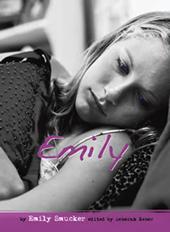
Speaking with Emily Smucker, Author of Teen-Memoir "Emily"

Emily Smucker, the 19-year-old author of Emily in the "Louder Than Words" series, is a Mennonite writer who loves to drink tea, wear bright colors, and blog about her unpredictable life.

Plagued with some sort of cold or fever or bizarre ache or pain for much of her life, Emily thought the dizziness and stomachaches at the start of her senior year were just another bout of “Emily flu.” She was eventually diagnosed with the rare and incurable West Nile virus.

The Louder than Words series, edited by Deborah Reber, www.smartgirlsknow.com, is the first-ever series of teen-authored memoirs, written by teens for teens.


What led you to start writing?
I've always loved making up stories, and when I was about ten I began to try writing them down. It was very frustrating at first. I could never seem to finish a story once I started it. But the more I did it, the better I got, and the more I fell in love with it. By the time I was 15 I was carrying a notebook around with me everywhere I went. The blogging craze hit my group of peers around that time, and so I started a blog. But while they have since abandoned their blogs, I still blog regularly, and it has been a tremendous help in my writing.

How did you decide which parts of your experience to include in your memoir?
Writing my memoir was sort of like putting a puzzle together. I took all my blog and diary entries from that year and tried to fit them together. What I ended up eliminating was the stuff that didn't contribute to the big picture. Well, basically stuff that I felt was too personal or too stupid, or that mentioned some person or place that would be confusing to the reader, since I never spoke of it before or since.

How is blogging similar to/different than writing a memoir?
There are two main differences that I see. First of all, writing a memoir was like putting a puzzle together, trying to figure out how little snippets of my life fit into a big picture. When I blog, however, I just jot down whatever I feel like saying, and don't have to worry about how it ties in to another piece of work.

The second main difference is the fact that a book is much more important and long lasting than a blog post. If I post something stupid on my blog, no one is going to go back in the blog archives five years from now and laugh at me. Unless they are a stalker. With my book, though, someone could easily read it five years from now.

The bottom line is, writing a memoir is a lot more of a careful precise job than writing a blog post.

What was your favorite part of writing the book? The greatest challenge?

My favorite part of writing the book was watching little snippets of my life turn into a complete story. It made me feel like perhaps my pain had been worth something, if it could be turned into an interesting story.


The greatest challenge, no question, was editing. It didn't help that I was trying to edit it on my mom's laptop while driving from Oregon to Colorado. Needless to say, I got somewhat carsick.


Each author page has a "play list" for her book.
Why did you choose those songs for your soundtrack?
When my editor told me I should pick out a playlist of songs, I was in a bit of a quandary. I almost never listen to music. I have a few songs that I like and that I listen to over and over again, but none of them really seemed to go along with my book.


So I called my friend Bethany. She is sort of obsessed with music. She made up a HUGE list of songs she thought I might like, and after listening to every single one I finally found three that I sort of liked.

"I have a Dream," by ABBA
- This one had a pretty tune and it reminded me of all the beautiful dreams for my future I had while being sick. Dreams were sort of my lifeline.


"Fireflies," by Faith Hill
- Bethany always said this song reminded her of me. It describes the way I like to imagine and dream.


"Beauty from Pain," by Superchic[k]
- When I wrote my book, I felt like I was finally seeing something beautiful, a story, come out of my pain. That's why I chose this song.


I added "You," by Switchfoot, because I think it is probably my favorite song. It is so hauntingly beautiful and it describes how I feel about God. Ultimately, it's not about me, it's about Him.
...


If I could contribute to the list now, I would probably add some Owl City songs, like "Fireflies" or "Hot Air Balloon," because the sort of dreamy randomness is similar to the way I think and wrote my book. I would also add "We Could Run Away" by Needtobreathe, because it describes the way I always wished I could just run away and fix my life somewhere else.

Who are some of your favorite authors?
My favorite books to read are middle grade fiction books, so my favorite authors are usually ones that have won the Newbery award or honor at some point. This includes Jerry Spinelli, Lous Sachar, Gail Carson Levine, Shannon Hale, Sharon Creech, E. L. Konigsburg, Kate DiCamillo, Robin McKinley, Lloyd Alexander, and Avi.

What do you know now that you wish you knew when you first started writing?
If you write and write and write, eventually you'll be able to finish a story. Don't be discouraged if you can't do it now. You will learn, eventually.

Advice for young writers?

I would advise young writers to start a blog. There are so many ways that blogging can be helpful to a writer. I once made a decision to post at least once a week, and this has helped me learn to be disciplined as a writer. Blogging has helped me determine what is boring and what is fascinating to readers, based on the number of hits or comments I get. People saw me as a real writer when I began blogging, and when the time came to write a memoir, 40% of it was already done and on my blog.


What's next?

Hopefully a novel with a teenage Mennonite girl as a protagonist. Different plots have gone through my head, but none have formed themselves into a novel yet. Sometimes I doubt that I am capable of writing a novel at 19. But who knows? After all, I wrote (well, mostly compiled) a memoir when I was 18!

Monday, April 19, 2010

Why Write? Publisher Paul Burt Speaks

Paul Burt is co-founder and president of www.PenandPublish.com. As a social entrepreneur, he is a do-gooder creative type who enjoys living a balanced life.

Why is writing so important for young adults?
The value of writing well is essential in so many professions today. Writing helps bring clarity to our ideas. It forces us to think on a deeper level. Self and creative expression not only helps us grow, but it feels great as well!

What do you know now that you wish you knew when you were a tween or teen?
I wish I would have trusted my inner voice - my intuition - more and been less afraid of being "me." Sometimes we try to make things work/fit/happen and spin our wheels in frustration when we would be better off just letting go. Everything you need is provided when you need it; ask; believe; receive. Teen author Christopher Combates’ new book - The Law of Attraction for Teens - tells it like it is.

Chris was interviewed last week on PurplePencilAdventures.com. The Law of Attraction for Teens was recently released by Teen Town Press, a division of www.PenandPublish.com.

How has the ability to express yourself helped you in life?
As a book publisher and entrepreneur, as a husband, father, and friend, in every relationship, for my own piece of mind, expressing through the written and spoken word are the foundation of life. The only thing more fundamental is our emotions. Personal expression is the very reason we exist. It fills my life with in-joy-ment!

Friday, April 16, 2010

Earth Day Adventure

Earth Day is April 22. Celebrate this weekend with a Purple Pencil Adventure that takes you out of your regular writing environment.

Grab your notebook and pen or pencil, go outside, experience nature, and write!

What do you see? What do you hear?
How does it feel to write outside?

Happy Writing!

Post how you felt about writing in nature - about nature - in the comments section below.

Friday, April 2, 2010

Poetry Adventure

Since April is National Poetry Month, this week's adventure is to Write a Poem!

Even if you do not consider yourself a poet, why not give it a shot!

Your poem can rhyme, but it doesn't have to. Use your senses. Write what you think and what you feel. You can even pick a word like "Poetry," write down the letters in a list, and choose a word represented by each letter.

P
O
E
T
R
Y

Poetry can be intense, but it can also be fun.

Check out the Write On! Online Challenge for April, which is to Write a Limerick. Details on the website.

Also Poets.org has some great resources for writing any kind of poem. Read more here.

Happy Creating!

Did you write a poem? How did you like it? Post your thoughts in the comments section below.

Tuesday, March 30, 2010

April: Screenwriting Adventure

April is Script Frenzy - write a screenplay in a month.

It's not just for grown-ups. Young writers (13 - 17 years old) can participate in the challenge, as well. Just go to the young writers site - http://ywp.scriptfrenzy.org/ - sign up, and set your page count.

There are lots of tips on getting started, so check out: "How Script Frenzy Works for Young Scriptwriters in Ten Easy Steps."

Join the Frenzy! Good luck and have fun!

If you are participating in the Script Frenzy Young Writers Program, let us know in the comments section below.

Friday, March 26, 2010

Listening Adventure

March is National Listening Awareness Month. Take about 5 minutes. Sit outside, in your home, at school. And just listen. Be aware of everything you can hear, whether it's birds chirping, a car zooming down your street, a snow plow - or a snowball fight, or classmates talking (you probably should do this during lunch or recess, not during class).

Note: If you live somewhere cold, you probably should try doing this adventure inside. Either that or bundle up!


Then, write down everything you just heard. Make a list of at least 15 things; maybe even 20. You will be surprised by everything you hear when you just pay attention.
When you write you want to ignite all of your senses. And this is a fun way to practice. Happy Writing!

Post 5 of the Things You Heard in the comments section below.

Wednesday, March 24, 2010

Talking with Teen Author Heather Paye, "A Gift from Above"

Heather Paye is a 16-year-old author from Arizona. She wrote her first novel - A Gift From Above - during National Novel Writing Month in 2008, and published it in March of last year. Heather is currently working on a poetry anthology to be published for Mother's Day.


What first drew you to writing?
Boredom. The first thing I wrote was a short story. I was sitting in front of the computer absolutely bored with all of the computer games that I already finished and finished again, so I opened up Microsoft Word and wrote the first thing that came to mind. It turned out completely, and absolutely terrible, but thinking back it's the best thing I've ever written - because it's the first.

What was your process for writing A Gift From Above?
A Gift From Above was an idea that I had for quite a few months before beginning writing it down. But I wrote it for a writing challenge called "NaNoWriMo" (National Novel Writing Month) where you attempt to write a 50,000 word novel in one month. So it was written quickly. I didn't write an outline, I simply started with an idea and went from there until finishing. Afterward, I set it aside for a couple weeks then went to work on editing.

How did you go about getting it published?
It was really a great opportunity from NaNoWriMo: to all who managed to write 50,000 words, they offered a free proof-copy to get it self-published. So, I went to the publisher's website, did some research, said "Why not?" Next thing I knew, I was putting all of my collected knowledge of book-publishing to the test. I did run into some issues in the process, though it was a huge learning-experience, and all came out well in the end.

What was your favorite part of writing it? The greatest challenge?
My favorite part was how naturally the story flowed while I was writing it. The characters felt really real to me and I knew exactly what I was going to write before I wrote it down. The greatest challenge was ending the story. I probably could have gone on with the story forever. Firstly, I probably would have bore my readers to death (all the action had already been written in previous chapters), and second I had no idea how it would turn out since this was the first story I wrote in first person.

You are also working on a poetry collection. How did that come about?
That was another idea that I had for quite awhile. Last December, I decided to put it into motion. I'm always looking for things to do for my wonderful mother, so I thought this poetry collection was a great idea for a gift for this Mother's Day. Originally it started out where I was only going to feature my poems and my siblings poems, but, observing the project from a different point of view, I thought it would be a great opportunity for other authors to also have a gift from their mother. That's where it was turned into a real anthology. I've also created a website for others to visit with loads of information and even polls to take which will help form nitpicky details about the poetry book. Local students have also submitted their poems, and I hope that this project will be able to help them out by not only boosting their self-esteem, but also their knowledge about the publishing industry.

How important is writing for tweens and teens? What skills does writing help you develop?
On a scale of 1to10 I would say writing for tweens and teens is an 8, it's very important. Not only does writing help skills such as English, Grammar, and Reading, but I think it also helps to keep a mind clear. When I first started writing, my skill level was like a 2nd grader's, the problem was, I was a 4th grader! Writing gave me an enjoyable crash course in so many different subjects. Now I find English is my favorite subject in school, because it is very helpful with what I do. Writing helps develop - like I said before - English, Grammar, and Reading, it also helps with time-management, and it develops great discipline. It takes a lot to write something, finish it, and edit it millions of times. If you want to punish a teen for a wrong-doing, give them a novel and tell them to edit it - or hand them paper and tell them to write a novel. It can be fun, but sometimes it is stressful, time-consuming, and simply hard.

Who are some of your favorite authors?
J.K.Rowling is the reason that I started writing. In one of her interviews she said, "Anyone can write a novel," and that is what inspired me. Nora Roberts is my role model, she has so many books available, it's just crazy. Christopher Paolini, M.J.Allaire, and L.J.Smith are more of my favorites. I should stop now... but the list goes on!

Advice for young writers?
Never, ever stop writing! Never stop learning, and never stop trying! You have something to learn from everyone - no matter how old you are. And most importantly, NEVER underestimate the power of EDITING! Just because publishers have editors, doesn't mean that you can send them error-filled words, if it's too bad, they'll reject you. I usually edit my work between 4 and 10 times before I even think about it being ready to send anywhere.

What do you know now that you wish you knew when you first started writing?
Oh, that's a hard one! There is so much I know now that I didn’t know before. 1. I wish I took heed of the words "Edit". 2. I wish I knew what I was getting myself into... No, forget that last one. I would have done it anyway!